
Events · 22 July 2025
Janmashtami at KTPO: The Operations Behind the ISKCON Nights
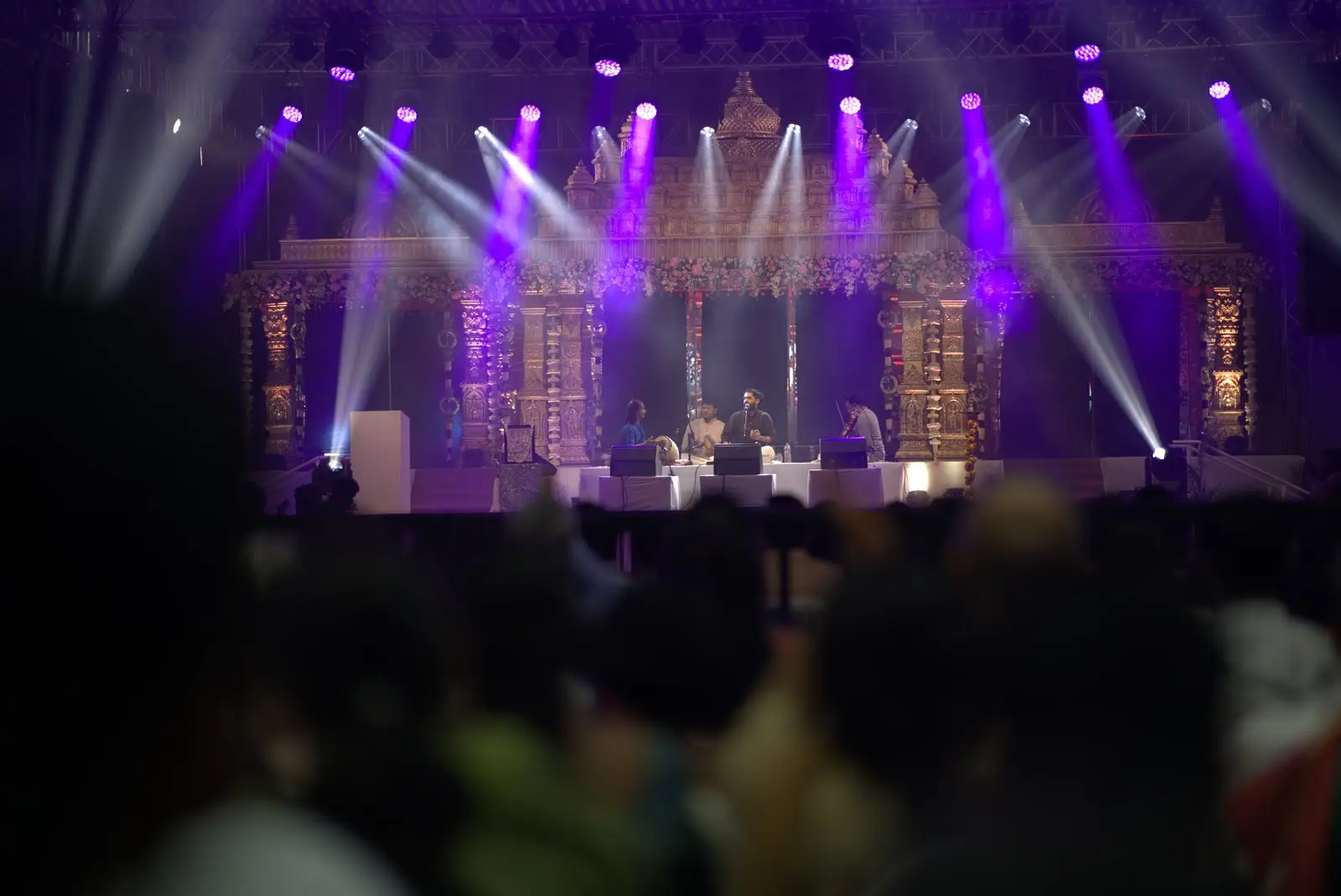
The hardest events to run are not the loudest ones. They are the ones where thousands of people, many with elders and children in tow, stay together deep into the night for a moment that cannot be rescheduled. Sri Krishna Janmashtami with ISKCON at KTPO Whitefield, which Kalaluha has produced across the 2024 and 2025 editions with Jana Small Finance Bank as title sponsor, is exactly that kind of event, and its operations plan looks very little like a concert's.
Crowd care, not crowd control
The phrase we use inside our faith and cultural practice is deliberate: crowd care at scale. A devotee crowd is cooperative, patient and multigenerational, and the operational plan has to give that goodwill somewhere to go. Entry design accounted for families arriving together and moving slowly. Inside the venue, circulation routes were planned around the reality that people do not sit still at a Janmashtami: they move toward darshan, toward annadana, toward the culturals, and back again. Clear signage, visible volunteers and staff, accessible water and washrooms, and rest space for elders were treated as core infrastructure, not amenities. Medical cover was planned for a long night with a wide age range, which is a different risk profile from a two-hour concert.
Annadana: feeding thousands as a production discipline
Annadana turns an event into an act of service, and it turns an operations plan into a supply chain. Food service for a gathering of this size demands coordination on preparation, transport, hygiene, serving points, queue design and waste management, all of it synchronised with the programme so that serving windows complement the ritual schedule rather than collide with it. Get annadana logistics wrong and you create the longest queue at the event. Get it right and it becomes many attendees' warmest memory of the night.
The midnight deadline
Everything in the run sheet bends toward one immovable point: the midnight arati. Artist sets across the editions, from Sooryagayathri to Siddhartha Belmannu to Maanya Arora, were scheduled backward from that anchor, with buffers protected fiercely, because a Janmashtami programme that runs late does not get to push its finale. Backstage coordination covered artist arrivals and green rooms as at any concert, but with an added layer: constant synchronisation with ISKCON's own ritual team, whose ceremonial sequence, abhishekam included, had absolute priority in the schedule. Two organisations, one clock, zero tolerance for drift.
Partnership as an operating system
The defining feature of these productions is that Kalaluha does not run them alone, and would not want to. Temple and institution partnerships are listed inside our services because they are a working method: ISKCON brings the ritual authority, the volunteer depth and the devotee relationship; we bring stagecraft, site operations, safety planning and show calling. The title sponsorship by Jana Small Finance Bank added a brand layer that had to be woven in respectfully, present without intruding on the devotional core.
Two editions have hardened this playbook into something repeatable, which is what allows the celebration to grow without losing its character. The full record is on the ISKCON productions page, a companion story from the same venue is on the Sid Sriram Janmashtami page, and the rest of our work lives in the gallery.
Keep reading
Every unforgettable night begins with an empty stage.
Start the build→