
Guides · 23 November 2025
Broadcast and Livestream Basics for Events: A Kalaluha Guide
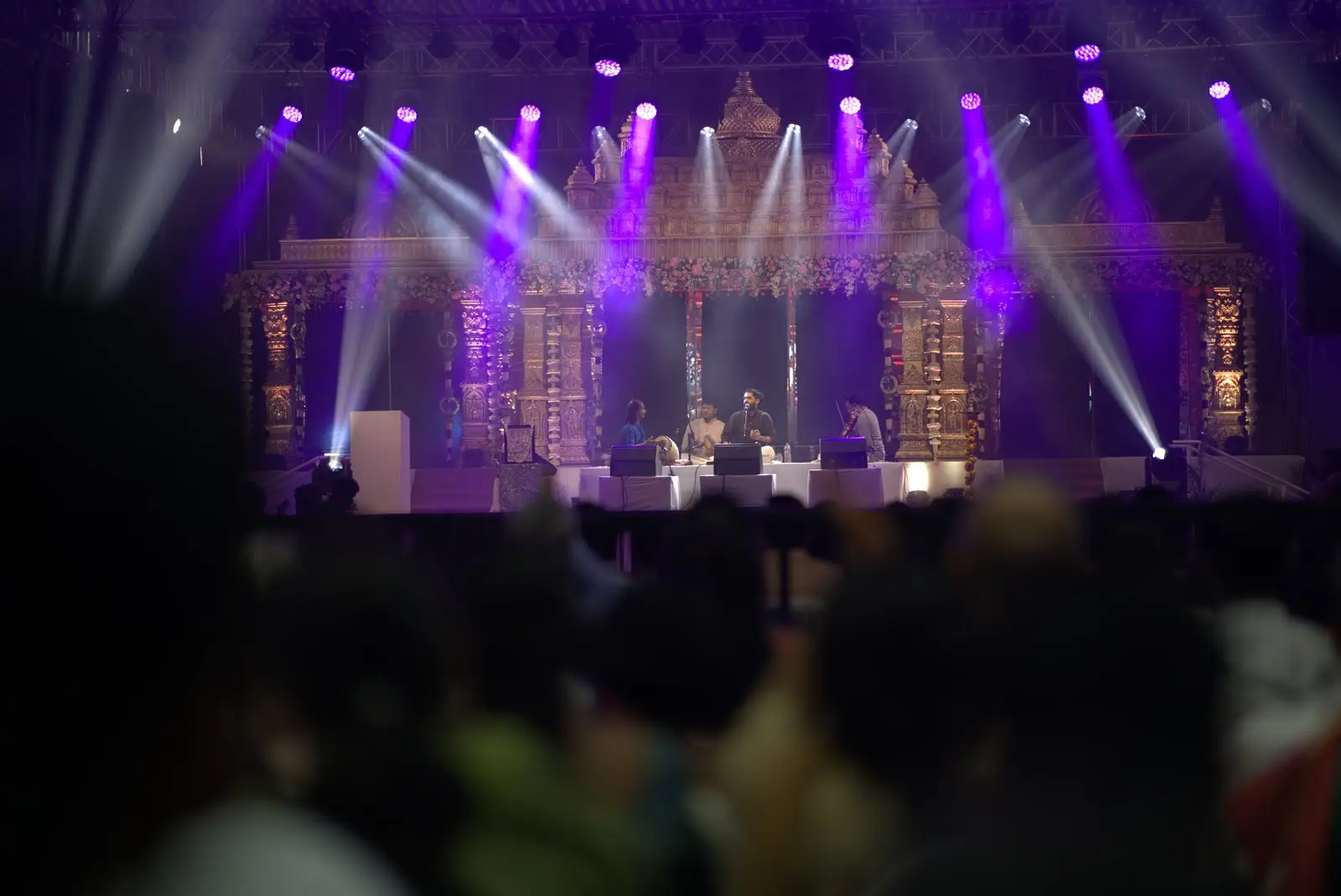
The moment a camera turns on, your event has two audiences: the one in the venue and the one on a screen, and they experience completely different shows. Producing for both without shortchanging either is the core problem of event broadcast. Kalaluha builds this capability into two of our services by name: LED walls, screens and broadcast within Large Format Productions, and sponsorship and broadcast packaging within Sports and Entertainment. Here is how we think about the fundamentals.
Decide what the broadcast is for
Broadcast is not one product. Before specifying a single camera, answer why the feed exists. Screen magnification inside the venue serves the live crowd: at scale, most of a big audience watches the artist on the LED, so the camera cut is part of the in-room show itself. A public livestream serves reach: people who could not attend, in other cities, watching on phones. A recorded capture serves the property's future: content, press, sponsor deliverables, and the archive that makes the next edition easier to sell. A sports property adds a fourth purpose, because broadcast packaging is often central to how a league or celebrity property earns: a format like Appu Cup Season 02, Kannada celebrity cricket in memory of Puneeth Rajkumar, is conceived with the screen in mind from the start.
Each purpose changes the camera plan, the cutting style and the budget of attention. Trying to serve all of them with one unconsidered feed serves none of them well.
Cameras are positions before they are equipment
The most consequential broadcast decisions are made on the venue map. A workable minimum for a music event covers three perspectives: a tight camera for faces and emotion, a wide camera for scale and context, and a mobile or side position for variety and cutaways to the crowd. Add positions as ambition grows, but never add a camera without knowing what story it tells.
Every format weights these differently. A devotional production like the ISKCON Janmashtami editions at KTPO Whitefield, with Vedic chants, culturals and midnight arati, wants coverage that is present but unobtrusive, honouring the occasion for thousands of devotees. A hip-hop night wants the crowd in frame constantly, because the crowd is half the show. And every camera position must be negotiated against the live audience's sightlines: the person who bought a ticket outranks the tripod, always.
The cut itself is a musical skill. A director who cuts on the phrase, holds shots through emotional beats and resists restless switching produces a feed that feels like the concert. Rehearsal and soundcheck are where the director learns the show's rhythm, which is one more reason we protect that time fiercely.
Livestreams live or die on unglamorous details
A stream fails at its weakest link, and the weakest link is rarely the camera. Dedicated, tested connectivity with a backup path. Audio taken as a proper broadcast mix, never a camera microphone, because viewers forgive soft pictures and never forgive bad sound. A monitored encode with someone empowered to act when it misbehaves. Clear rights and permissions for everything the stream carries, settled during advance, since artists and their teams have legitimate positions on what gets broadcast.
Run the stream like a small show inside the show: its own checklist, its own rehearsal pass, its own owner on the night.
The screen is where the event outlives the night
A production ends at pack-down, but its broadcast layer keeps working: for sponsors, for press, for the audience that shares it, and for the property's next edition. That afterlife is production value compounding, and it is planned, not hoped for. See how screen thinking shapes a sports property at Appu Cup, how large devotional programmes are covered at our ISKCON Janmashtami productions, and where broadcast sits in the full stack at our services.
Keep reading
Every unforgettable night begins with an empty stage.
Start the build→