
Guides · 24 September 2025
Planning a Devotional Concert with Cultural Sensitivity: Kalaluha's Guide
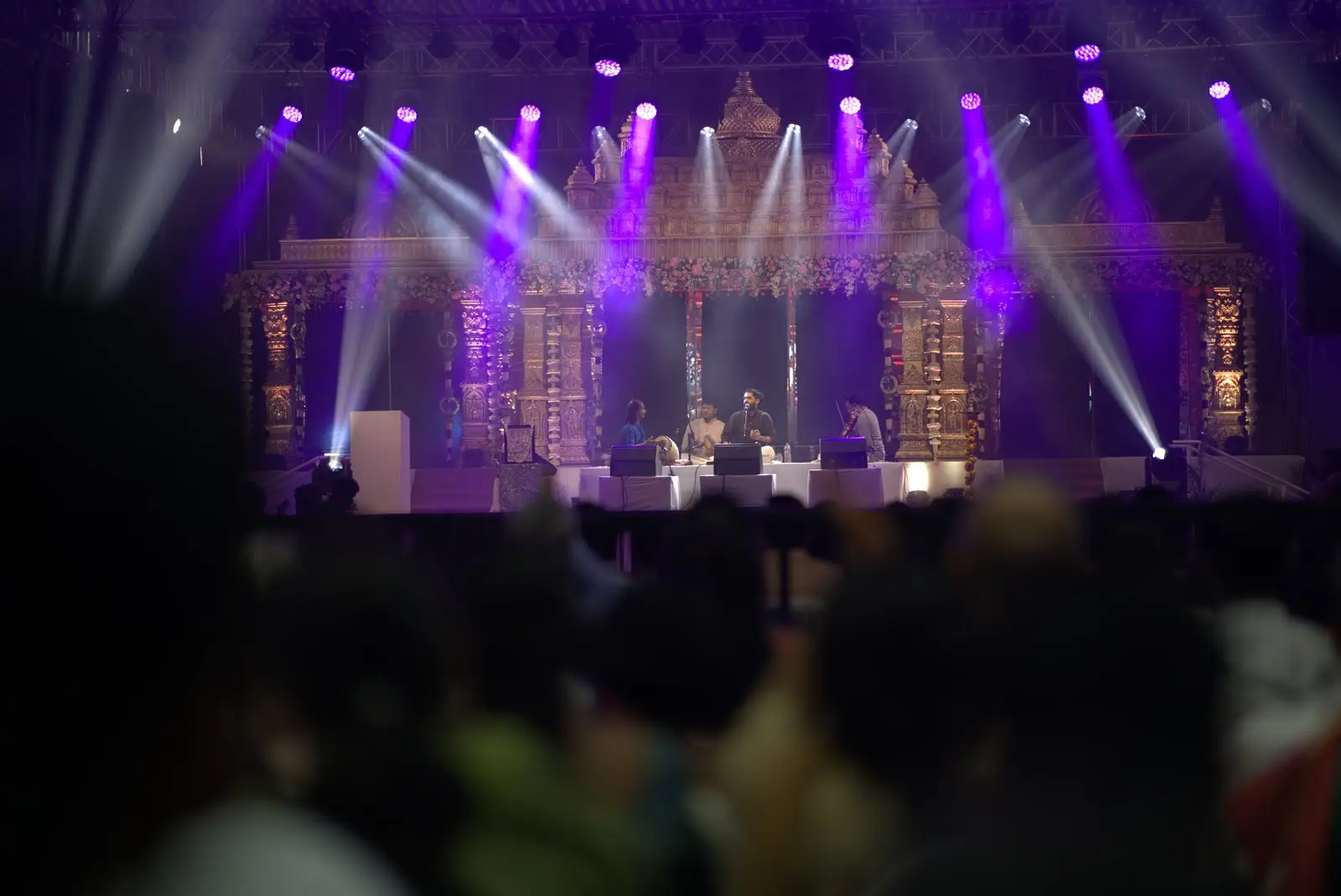
The first rule of devotional production is that you are not the main event and neither is the artist. The occasion is. A Janmashtami programme exists for Janmashtami; the stage, the sound and even the most celebrated voice on the bill are in service of the observance. Kalaluha has produced Sri Krishna Janmashtami with ISKCON at KTPO Whitefield across 2024 and 2025, staged Sid Sriram's Janmashtami concert in support of the Hare Krishna Dham landmark initiative, and produced the Nandagovindam Signature Edition marking 25 years of bhajans. This guide distils what those productions taught us.
Let the ritual calendar run the show
A commercial concert's schedule serves the audience's convenience. A devotional programme's schedule serves the ritual. Our ISKCON productions carried Vedic chants, cultural performances, midnight arati, annadana and abhishekam, and each of those elements has its own requirements and, crucially, its own timing. Midnight arati happens at midnight. That fixed point disciplines everything upstream: artist set lengths, changeover windows, crowd arrival design. Build your run of show backwards from the ritual anchors, and involve the institution's own authorities in that schedule from day one. They know the observance; you know production. The show lives in the overlap.
Partnering with institutions is its own craft. ISKCON as presenter, and Jana Small Finance Bank as title sponsor of the KTPO editions, shows the structure working: the institution guarantees authenticity, the sponsor sustains the scale, and the producer makes both look effortless.
Curate artists who belong to the tradition
Devotional audiences hear the difference between an artist performing devotion and an artist in devotion. Our ISKCON editions featured Sooryagayathri, whose Vishnu Sahasranamam renditions carry a massive following, Siddhartha Belmannu, a Hindustani vocalist trained under Pandit Vinayak Torvi in the Kirana and Gwalior gharanas, and Maanya Arora, with bhajans on T-Series and Saregama and more than 2,000 performances. Sid Sriram brought a Carnatic-rooted voice with global reach to Janmashtami at KTPO. For Nandagovindam's 25-year milestone, orchestral arrangements under music director Sharreth elevated the bhajans without displacing them. In each case the curation logic was identical: the artist deepens the devotion rather than borrowing its stage.
Design for a congregation, not a crowd
Our Faith and Cultural Experiences practice names its disciplines plainly: festival and bhajan productions, temple and institution partnerships, stage, decor and darshan flow, crowd care at scale. Darshan flow is the one commercial producers underestimate. Thousands of devotees at a Janmashtami night are not there only to watch; many are there to participate, to receive prasada at annadana, to be present for abhishekam. Queue design, volunteer briefing, accessibility for elders and families, and sound that lets the congregation hear itself chant: these are the production's real deliverables. Decor language deserves equal care. The visual world of the event should come from the tradition itself, and every frame should pass a simple test: would the institution's own elders feel the occasion was honoured?
Respect, in the end, is operational. It shows up in schedules that protect rituals, curation that serves devotion, and logistics that treat every devotee as a guest. The work is documented at ISKCON productions, Sid Sriram, Krishna Janmashtami and Nandagovindam Signature Edition, and the practice behind it at Faith and Cultural Experiences. If your institution is planning an observance at scale, we would be honoured to build the stage it deserves.
Keep reading
Every unforgettable night begins with an empty stage.
Start the build→