
Guides · 30 October 2025
Monsoon-Proofing an Outdoor Event: Lessons from Kalaluha Productions
Bengaluru rain does not send a calendar invite. It arrives mid-soundcheck, sits over the venue for forty minutes, and leaves you to explain to a full crowd why the show is or is not going ahead. After producing outdoor nights at NICE Grounds, Lakeside at Orion Mall and open palace grounds, we have learned that monsoon-proofing is not one decision. It is a hundred small decisions made weeks before the first cloud forms.
Protect the three things rain actually attacks
Rain threatens exactly three categories: people, power and gear. Everything in a wet-weather plan serves one of those.
People first. An open field like NICE Grounds, where we staged the Hiphop Tamizha Home Edition, holds a large standing crowd with no natural shelter. That means your plan must answer where thousands of people go if the sky opens, how they get there without crushing, and how long they can wait before the show resumes or gets called. Sheltered or semi-covered venues change the maths: at Lakeside at Orion Mall, where Padma Shri Kailash Kher performed, the mall's own structures gave the crowd somewhere to be that was not a muddy field.
Power second. Water and distribution boards are natural enemies. Every outdoor Kalaluha production treats power, crew and site logistics as a single engineering problem: cabling raised or trenched, junctions covered, generators positioned on ground that will not flood, and a clear isolation procedure if water reaches anything live.
Gear third. LED walls, consoles and backline all have different tolerance for moisture. Roofed stages, side scrims and covered front-of-house positions are not decoration. They are what lets you restart a show instead of ending it.
The site tells you where the water goes
Do the recce imagining the ground after an hour of rain. Where does water pool? Which paths turn to slush? Where will a truck sink? Ground conditions decide stage position, barricade lines and even where you place food and toilets, because a queue standing in ankle-deep water stops being a queue. On multi-day builds this matters even more: a load-in that starts in dry weather can end in mud, and your schedule needs slack for that.
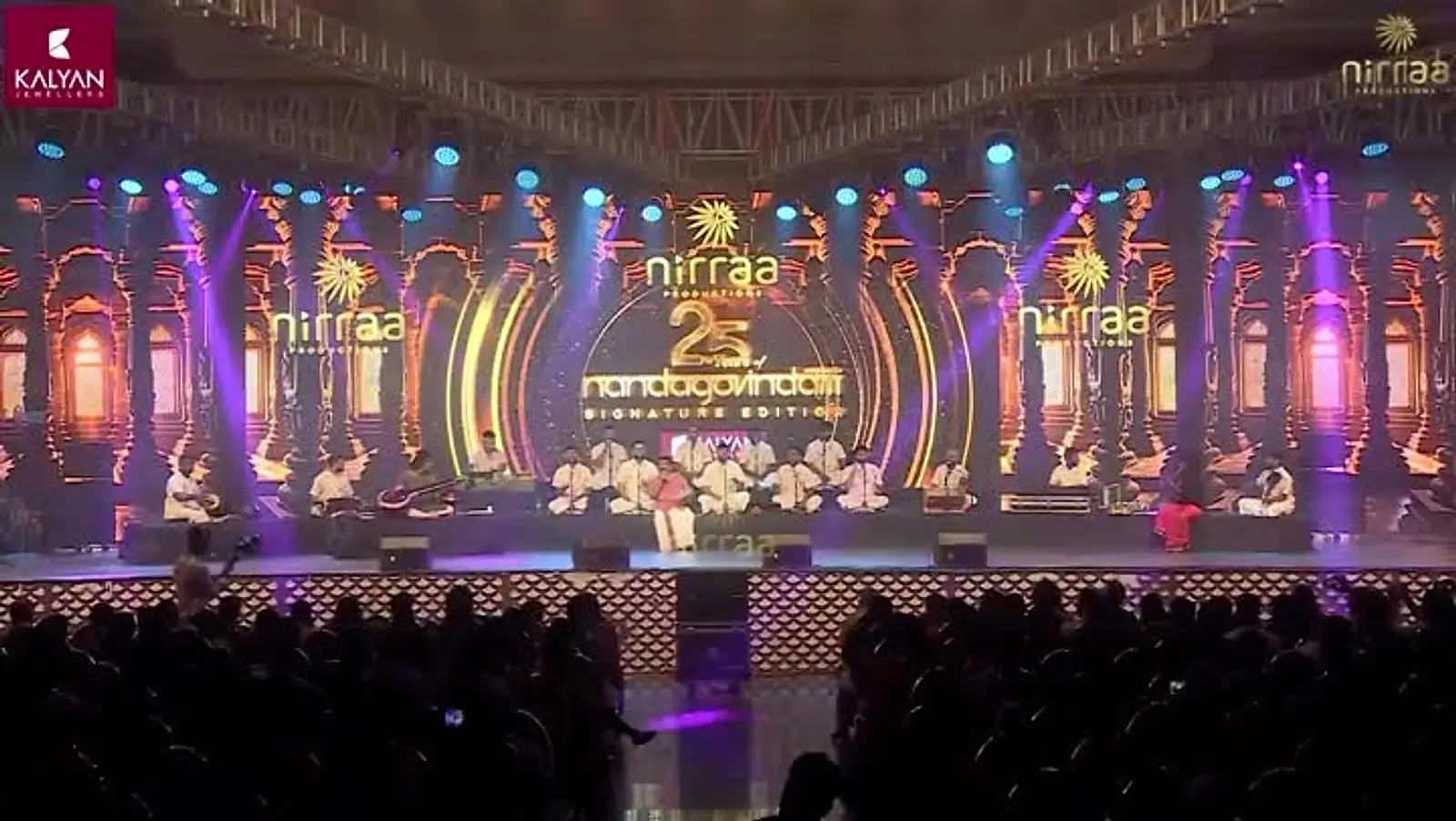
Grounds venues like Royal Tripura Vasini Palace Grounds, where Nandagovindam Signature Edition 2026 is planned, reward this kind of walking-the-site discipline. Palace grounds are beautiful and vast, and vastness means drainage patterns you must map rather than assume.
Decide your hold-and-resume rules before show day
The worst time to invent policy is with a wet crowd watching. Before doors, agree in writing: who has authority to hold the show, what conditions trigger a hold, how long you will hold before calling it, and who communicates with the audience. The anchor matters enormously here. A calm, confident voice on the microphone during a rain hold keeps a crowd patient. Silence turns them anxious.
Also decide the artist protocol. Touring artists have their own riders and their own limits on performing in weather. Settle those conversations during advance, not at stage side.
Rain is a production input, not an excuse
The audiences who bought tickets to a Kalaluha night do not lower their expectations because of a forecast. Our Large Format Productions practice exists precisely for this: stage and set engineering, power and site logistics, safety and clearances, all designed so the show survives whatever the evening brings. A monsoon show that runs smoothly does not feel lucky to the audience. It feels professional, and that is the point.
If you are planning an open-air event during the rain months, study how different sites handle scale by looking at our Hiphop Tamizha production at NICE Grounds and the Kailash Kher lakeside show, and see the full scope of our production services at our services section. Plan for the rain you hope never comes, and the night takes care of itself.
Keep reading
Every unforgettable night begins with an empty stage.
Start the build→