
Guides · 4 October 2025
Concert Sound Engineering Basics Every Organiser Should Know
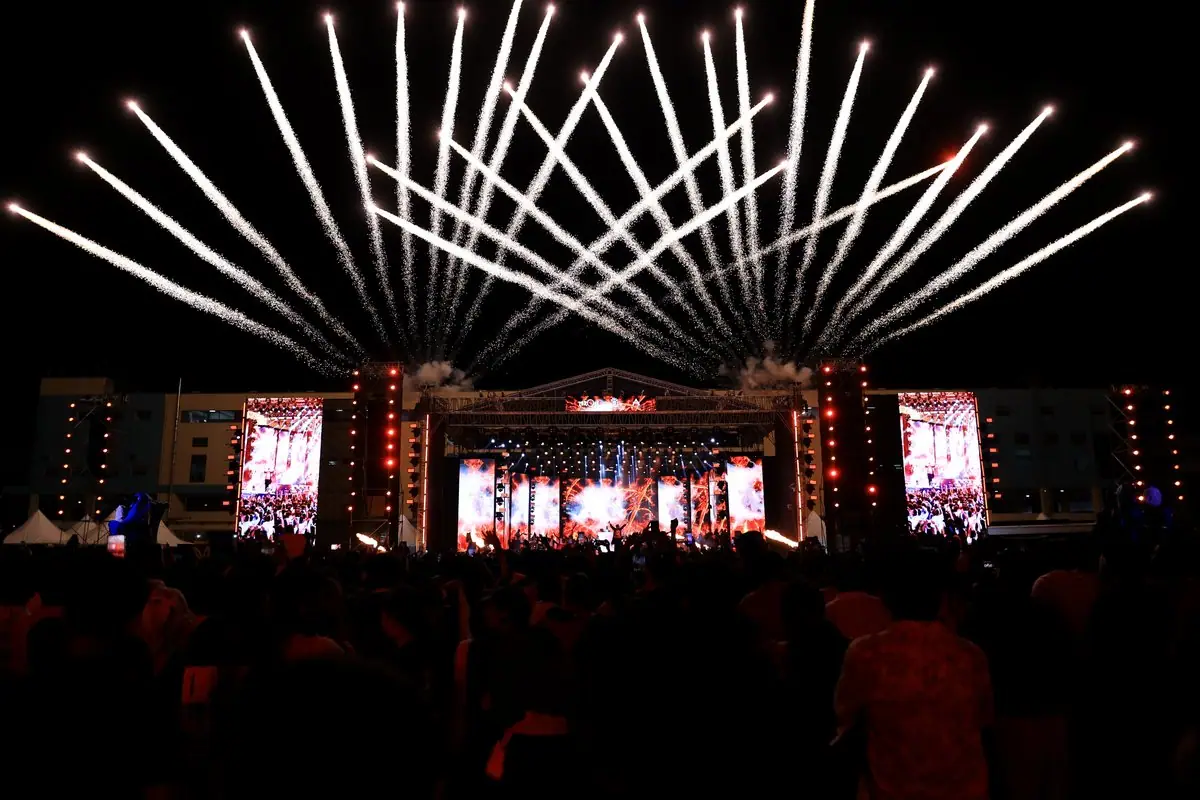
Nobody leaves a concert praising the sound. They leave praising the artist, and that is exactly how it should be, because sound engineering succeeds by disappearing. But as an organiser, you cannot treat audio as a vendor line item you never think about. Across close to thirty productions since 2023, we have learnt that the difference between a good night and a great one usually lives in the sound plan, and you do not need to be an engineer to ask the right questions.
The venue is half the sound system
Every room and ground has an acoustic personality before a single speaker arrives. Lakeside at Orion Mall, where we staged Padma Shri Kailash Kher and Band Kailasa, is an open waterside setting where sound travels freely and the challenge is coverage and neighbouring noise limits. KTPO Whitefield, where thousands of devotees heard Sid Sriram on Krishna Janmashtami, is a large enclosed space where reflections must be managed so a voice built on Carnatic precision stays clean. A hard-walled indoor venue flatters nobody by default; an open ground swallows low end. Your sound partner should walk the venue before quoting, and if they do not ask to, that silence tells you something.
What the audience hears versus what the artist hears
A concert runs two separate sound worlds. The front of house system is what the audience hears: the main speaker arrays, the subwoofers, the delay towers that carry sound to the back of a large ground. The monitor system is what the artist hears on stage, through wedges or in-ear systems, and it is arguably more important, because a performer who cannot hear themselves cannot perform. A vocalist of Shreya Ghoshal's calibre, whose All Hearts Tour we produced to a sold out house, works with fine dynamic control, and that control depends entirely on the monitoring being right. When an artist stops mid-song and gestures at their ears, the monitor world has failed, and the audience always notices.
Soundcheck is a rehearsal for problems
Soundcheck is not the band warming up. It is the systematic hunt for everything that could go wrong at nine pm, conducted at four pm. Each input is tested, each musician's monitor mix is built, the room is tuned. Multi-artist shows multiply the work: Crazy Brahma put Vijay Yesudas, Rajesh Krishnan, Mano, Anuradha Bhat and Madhu Balakrishnan on one stage, and every voice needs its own settings recalled instantly during changeovers. A hip-hop bill is different again: Hiphop Tamizha's show at NICE Grounds carried a beatboxer, a DJ and rappers as pre-acts, each with completely different input lists. As organiser, your job is to protect soundcheck time in the schedule. Every hour shaved off soundcheck is borrowed against the show itself.
Questions worth asking your audio team
- Have you covered this venue or one like it before?
- What is the coverage plan for the farthest ticket?
- How are artist monitor requirements being collected in advance?
- What is the backup for the main console and power feed?
- Who is the one person accountable for sound on show night?
None of these require technical knowledge to ask. All of them reveal whether you are dealing with professionals. Sound, stage and light sit together inside our Live Concert Experiences service precisely because they cannot be planned apart. If you want to hear how these principles played out across genres, from devotional evenings to arena hip-hop, walk through our productions, starting with the Sid Sriram Krishna Janmashtami concert where a single voice held thousands of people still.
Keep reading
Every unforgettable night begins with an empty stage.
Start the build→